Hello and welcome to my blog! In this post, I’m going to introduce you to one of the most popular and powerful programming languages in the world: Python. Python is a versatile, easy-to-learn, and fun language that can be used for a wide range of applications, from web development to data science to machine learning. But how did Python come to be? What is the history behind this amazing language? Let’s find out!
Python was created by Guido van Rossum, a Dutch computer scientist who worked at the Centrum Wiskunde & Informatica (CWI) in Amsterdam. During the Christmas holidays, he started working on Python in 1989 as a hobby project. He wanted to create a simple, elegant, and expressive language that could be used as a scripting language for the Amoeba operating system. He named the language after Monty Python, his favorite comedy group.

Python was influenced by several other languages, such as ABC, Modula-3, C, and Lisp. Van Rossum released the first version of Python, 0.9.0, in February 1991. It had features such as classes, exception handling, functions, and modules. The language quickly gained popularity among programmers who appreciated its readability, flexibility, and productivity. Van Rossum continued to develop and improve Python over the years, adding new features such as lambda expressions, generators, decorators, and comprehensions.
Python also attracted a large and active community of developers who contributed to its growth and evolution. They created libraries and frameworks that extended Python’s capabilities and made it suitable for various domains and tasks. Some of the most notable examples are Django for web development, NumPy and SciPy for scientific computing, Pandas for data analysis, TensorFlow and PyTorch for machine learning, and Flask for microservices.
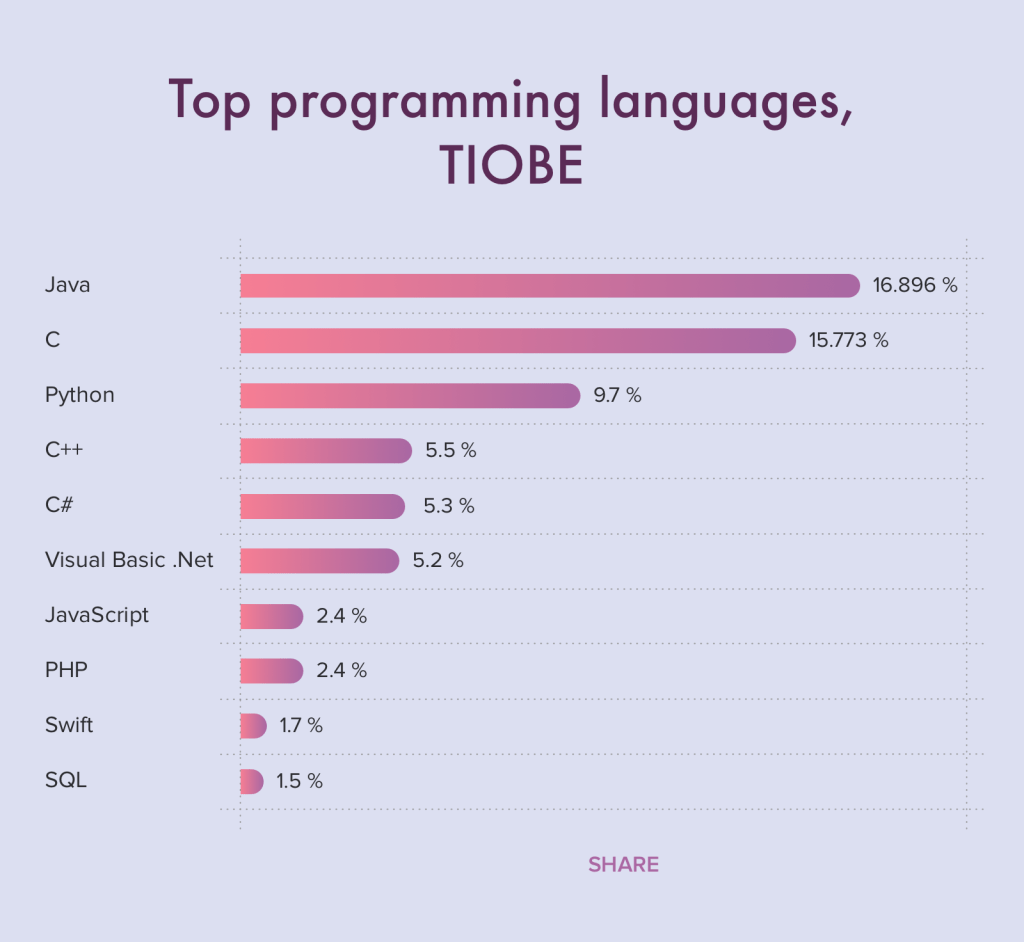
Today, Python is one of the most widely used and loved languages in the world. It is ranked among the top five languages by various surveys and indices, such as the TIOBE Index, the PYPL Index, and the Stack Overflow Developer Survey. It is used by many prominent companies and organizations, such as Google, Facebook, Netflix, NASA, and Spotify. It is also taught in many schools and universities as an introductory language for computer science.
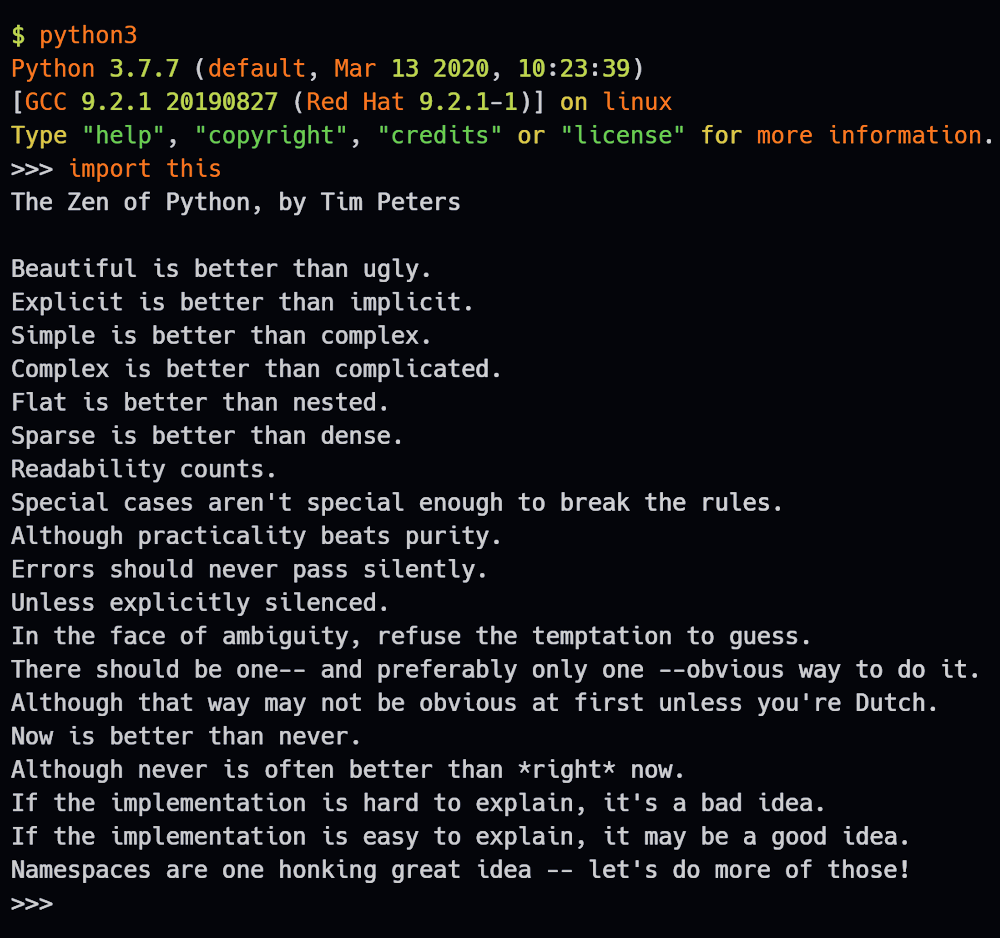
Python is not only a language but also a philosophy. It has a set of principles that guide its design and implementation, known as the Zen of Python. These principles emphasize simplicity, clarity, beauty, and pragmatism. They can be accessed by typing “import this” in the Python interpreter. Here are some of them:
- Beautiful is better than ugly.
- Explicit is better than implicit.
- Simple is better than complex.
- Complex is better than complicated.
- Readability counts.
- There should be one– and preferably only one –obvious way to do it.
- If the implementation is hard to explain, it’s a bad idea.
- If the implementation is easy to explain, it may be a good idea.
Python is more than just a language; it’s a way of thinking and solving problems. It’s a language that encourages creativity, curiosity, and collaboration. It’s a language that makes programming fun and enjoyable. If you want to learn more about Python or start your own journey with it, you can visit the official website or Stay tuned for more educational content coming soon! Happy coding! ✌

